Soil Testing
Soil Testing for Residential Buildings in Kakinada: What Tests Are Actually Mandatory?
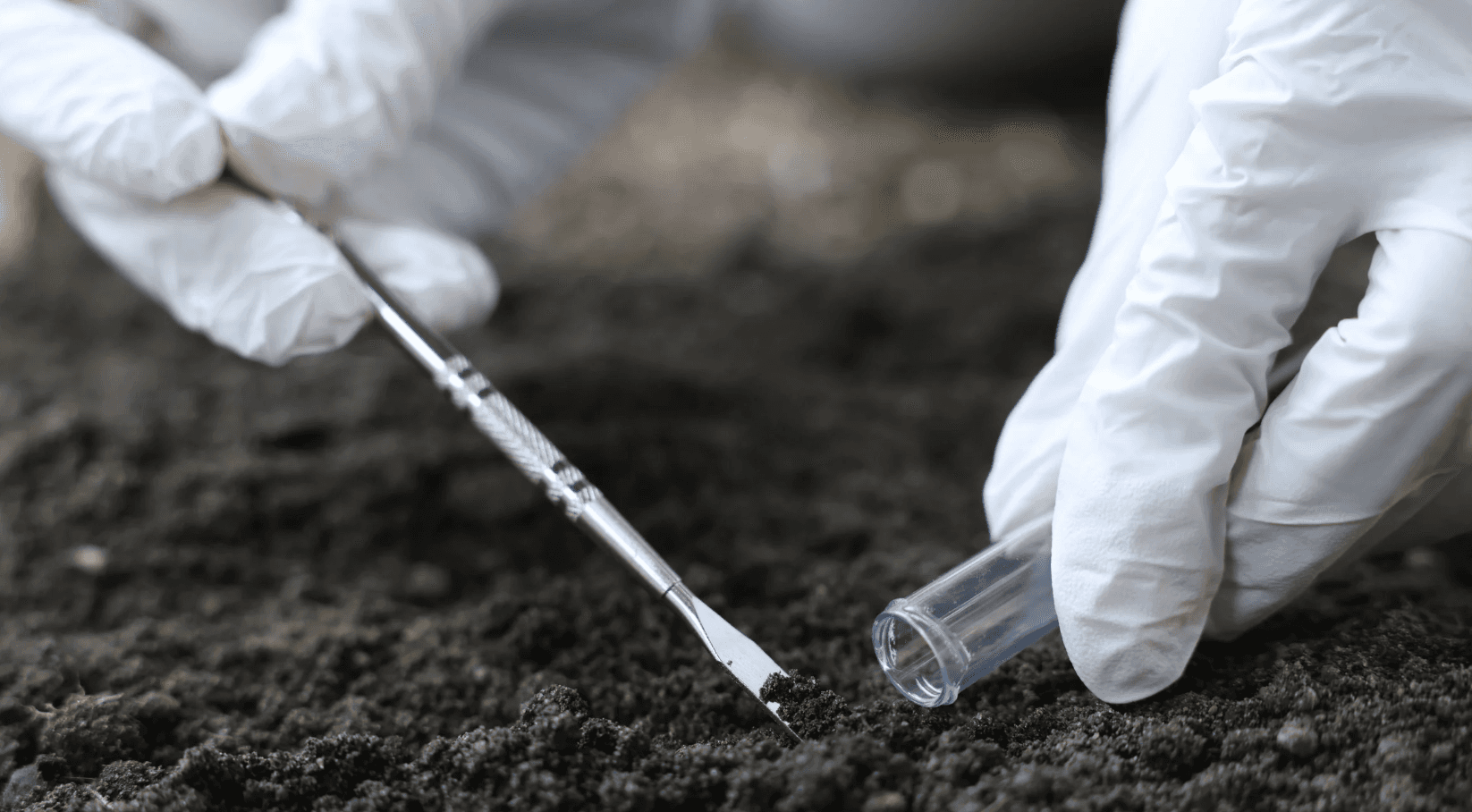
Building a residential project in Kakinada? The first question isn't about design or budget it's about the soil beneath your foundation. The right soil tests reveal if your site can support the building weight safely. The wrong tests waste money on unnecessary analysis. This guide cuts through the confusion and shows you exactly which tests your Kakinada residential project needs and why.
The Kakinada Soil Challenge
Kakinada sits on the coastal plain of Andhra Pradesh, built on alluvial soils deposited over centuries by the Godavari River. These soils have consistent characteristics that shape which tests actually matter for residential buildings:
The water table in Kakinada averages 4 to 6 meters deep in summer, dropping to just 1 to 2 meters during monsoon season. This seasonal variation affects foundation design, concrete durability, and ground stability. Alluvial soils in Kakinada typically have moderate to low bearing capacity, meaning foundation depth and design must account for soil strength rather than assuming generic specifications from textbooks.
Builders here face real decisions: soil strength varies block by block in Kakinada, so cookie-cutter foundation designs often fail. Testing removes guesswork.
The Mandatory Test: Specific Gravity
Why it's mandatory: Specific gravity establishes baseline soil composition. Without it, you're designing blind.
Specific gravity measures the density of soil solids relative to water. For Kakinada's alluvial soils, this number tells you if you're dealing with silt-dominated soil (lighter, weaker) or sand-dominated soil (heavier, stronger). This single number shapes your entire foundation approach.
In Kakinada's alluvial deposits, specific gravity typically ranges from 2.60 to 2.75. If your site tests at 2.55, it signals fine silt content, meaning lower bearing capacity and deeper foundations needed. If it's 2.70 or above, sand content is higher, allowing shallower foundations.
Who needs it: Every residential project in Kakinada. No exceptions.
The Critical Tests: Liquid Limit & Plastic Limit
Why they matter: These tests determine if soil becomes unstable when wet, which is everything in Kakinada's monsoon climate.
Liquid limit (LL) is the moisture content where soil loses strength and flows like liquid. Plastic limit (PL) is where soil transitions from brittle to plastic. The difference between them (plasticity index, or PI) tells you how sensitive the soil is to water.
In Kakinada alluvial soils, typical liquid limits range from 35 to 50 percent. A site with LL of 45 percent means the soil becomes dangerously unstable if moisture exceeds 45 percent. During Kakinada's monsoon, when water table rises from 6 meters to 1 to 2 meters, that threshold matters. High plasticity soils (PI above 20) shrink and swell with seasonal water table swings, causing differential settlement and foundation cracks.
Real Kakinada example: A residential project in Rajendra Nagar with LL of 48 percent and PI of 22 experienced foundation cracks three years post-construction. Why? Monsoon saturation caused the soil to expand beneath the foundation, creating uneven support. Pre-construction LL/PL testing would have flagged this risk and allowed deeper, more stable foundation design.
These tests directly inform:
Foundation depth (deeper for high-PI soils)
Fill material requirements (if existing soil is unsuitable)
Drainage design (control moisture for stability)
Who needs it: Every residential project in Kakinada where foundation depth exceeds 1.5 meters or where soil appears silty/clayey.
The Load-Bearing Decider: CBR Test (California Bearing Ratio)
Why it's critical for residential buildings: CBR tells you how much weight per square centimeter the soil can safely support.
The CBR test compresses a standard piston into soil samples at two states: unsoaked (dry, as-compacted) and soaked (simulating monsoon saturation). Residential foundations in Kakinada must account for both. A CBR of 6 percent unsoaked might drop to 2 percent soaked, a 70 percent loss of bearing capacity.
CBR directly determines:
Footing size (larger area needed for lower CBR)
Raft vs. isolated footings (low CBR often requires raft foundation)
Foundation depth and design (low CBR = deeper, more extensive foundations)
In Kakinada, typical CBR values range from 2 to 6 percent for alluvial soils. Here's the practical difference:
CBR 2 to 3 percent: Weak soil, requires raft foundation or very deep isolated footings. Suitable footing pressure: 0.75 to 1.0 kg/cm².
CBR 4 to 5 percent: Moderate soil, allows isolated footings at 1.0 to 1.25 kg/cm². Suitable for most residential buildings.
CBR 6 percent and above: Better soil, allows even shallower foundations at 1.25 kg/cm² or higher.
A residential project in Gaigolupadu with CBR of 2.5 percent unsoaked, 1.8 percent soaked would require a raft foundation. The same site with CBR of 5 percent allows isolated footings. Testing informed a foundation design difference that affects both structure type and timeline.
Who needs it: Every residential project in Kakinada. Non-negotiable.
The Optional But Revealing Test: Direct Shear Test
When to add it: If LL/PL results suggest high settlement risk or if CBR seems unexpectedly low.
Direct shear testing measures soil cohesion (internal stickiness) and angle of friction (resistance to sliding). These parameters refine foundation design beyond what CBR alone tells you. Geotechnical engineers use shear values to calculate bearing capacity more precisely and to assess slope stability if your site is on a slope.
In Kakinada's alluvial soils, typical cohesion values range from 0.5 to 1.5 kg/cm², and friction angles from 28 to 35 degrees. Lower cohesion + lower friction angle = weaker soil = deeper foundation.
Direct shear is optional for most residential projects but becomes mandatory if:
Site has visible slopes or nearby slopes
CBR results show unexplained low values
Soil appears predominantly clay-based (high LL)
Foundation will be at shallow depth (<1.5 meters) and bearing capacity calculations need refinement
The Seasonal Reality: Water Table Variation Testing
Why it matters in Kakinada: Water table depth is the single biggest variable affecting foundation design here.
Kakinada's water table isn't static. Summer depths (4 to 6 meters) versus monsoon depths (1 to 2 meters) represent a swing of 3 to 5 meters. This affects:
Concrete durability (deeper water table = more stable, less corrosion risk)
Settlement patterns (higher water table = higher settlement)
Foundation design depth (must account for worst-case, monsoon depth)
Many builders overlook this, designing foundations assuming average water table depth. Then monsoon saturation causes unexpected settlement or concrete deterioration. Water table observation wells or geophysical testing adds accuracy.
Who needs it: Residential projects in low-lying areas of Kakinada or near water bodies. Standard for multi-story projects where settlement must be minimal.
Which Tests Can You Skip?
Builders often ask: can I skip the shear test? Consolidation test? Heavy compaction test?
For most residential buildings in Kakinada:
Skip consolidation test unless project is multi-story (more than 5 floors) or has very strict settlement tolerances.
Skip heavy compaction test unless backfill fill is required. Standard light compaction is sufficient for residential fill.
Skip permeability test unless basement design or very deep foundation is involved.
Skip clay mineral analysis unless soil appears highly expansive (obvious visible volume changes).
Keep specific gravity, LL/PL, CBR, and water table observation. Add direct shear only if CBR results warrant detailed bearing capacity calculation.
The Testing Timeline for Residential Projects in Kakinada
Soil testing turnaround matters. Most residential projects start immediately after land acquisition. Understanding when testing fits into your schedule prevents delays.
Standard soil investigation in Kakinada: 3 to 5 business days from sample collection to report delivery. Plan for this during land due diligence, not during construction layout phase. Testing during construction is reactive and expensive.
The testing report includes:
Soil sample boring logs
Test results (specific gravity, LL/PL, CBR, water table depth)
Bearing capacity recommendations
Foundation design guidance (footing size, depth, type)
Armed with these results, your structural engineer designs foundations appropriate for your actual soil, not assumptions. Budget reflects real requirements, not contingency padding.
How Soil Properties Shape Foundation Type in Kakinada
Testing results directly translate to foundation decisions:
Low CBR (2 to 3 percent) alluvial soil:
Foundation type: Raft
Typical depth: 1.0 to 1.5 meters
Risk: Foundation cracks if soil further weakens
Moderate CBR (4 to 5 percent) with stable water table:
Foundation type: Isolated footings
Typical depth: 1.5 to 2.0 meters
Risk: Manageable with proper design
Higher CBR (6+ percent) or engineered fill:
Foundation type: Shallow isolated footings
Typical depth: 1.0 to 1.5 meters
Risk: Lower if design parameters are met
Kakinada's alluvial soils typically fall into the 4 to 5 percent CBR range, making isolated footing design most common. But local variation means testing, not assumptions, should drive this decision.
Real Builders' Mistakes in Kakinada
Mistake 1: Testing after construction starts. By then, wrong foundation design is already built. Fixing it becomes exponentially more difficult and time-consuming.
Mistake 2: Using generic soil data from nearby projects. Kakinada soil varies street by street. Your site's CBR may be 4 percent while the project two blocks away is 2.5 percent. Different designs needed.
Mistake 3: Ignoring water table seasonality. Design for summer water table (6 meters), then monsoon saturation (1 to 2 meters) causes unexpected settlement. Preventable with accurate seasonal testing.
Mistake 4: Accepting generic test reports without site-specific interpretation. A report that says "suitable for building" doesn't tell you if raft foundation is required versus isolated footings. Push for bearing capacity recommendations tied to your specific soil results.
What Gets Tested and How
Standard residential soil investigation in Kakinada involves:
Boring: A hole is drilled to foundation depth (typically 2 to 3 meters for residential). Soil samples are collected at 0.5-meter intervals.
Field observations: Water table depth is noted at boring location during monsoon and pre-monsoon seasons if possible.
Laboratory testing: Samples undergo specific gravity, LL/PL, and CBR testing. Results are compiled with boring logs.
Report: Geotechnical engineer interprets results and recommends bearing capacity, foundation depth, and soil-specific design parameters.
The Bottom Line: Which Tests Are Actually Mandatory for Your Kakinada Residential Project?
Mandatory for every project:
Specific gravity (baseline)
Liquid limit and plastic limit (seasonal behavior)
CBR test, both unsoaked and soaked (bearing capacity)
Water table depth observation (foundation design)
Optional but often recommended:
Direct shear test (if soil appears weak or unstable)
Water table testing in monsoon season (if project is in low-lying area)
Skip these for typical residential:
Consolidation test (unless multi-story)
Permeability test (unless basement design)
Heavy compaction test (unless significant fill required)
Testing prevents guesswork. In Kakinada's alluvial soils with seasonal water table swings, guesswork becomes dangerous. Foundation cracks, settlement, or durability failure in the years after construction are all preventable through proper soil investigation.
Next Step: Get Your Site Tested
Your Kakinada residential project deserves a soil investigation matched to your actual soil, not generic assumptions. Proper testing and geotechnical analysis inform better design decisions from the start.
Reach out to discuss your project's soil testing requirements. We'll determine exactly which tests your site needs, explain what each result means for your design, and deliver a report your structural engineer can trust.
Contact us today to schedule a site visit and soil investigation plan for your residential project in Kakinada.
Insights & Article